
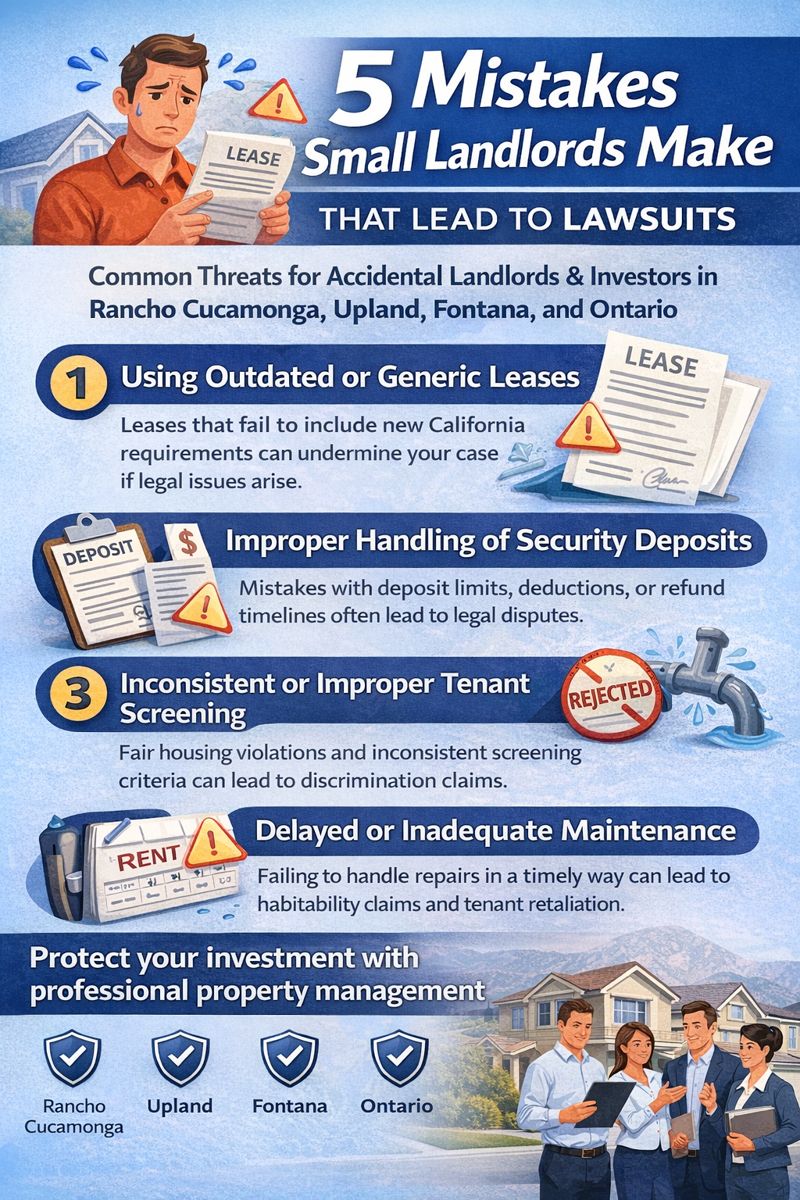
5 Mistakes Small Landlords Make That Lead to Lawsuits
Owning a rental property can be a smart financial move—but for many accidental landlords and small mom-and-pop investors, it becomes stressful fast. In cities like Rancho Cucamonga, Upland, Fontana, and Ontario, we regularly see well-intentioned property owners face legal trouble—not because they’re bad landlords, but because they’re unaware of how easy it is to make a costly mistake.
California is one of the most heavily regulated states for rental housing. Even a single oversight can trigger disputes, fines, or lawsuits. Below are five of the most common mistakes small landlords make that lead directly to legal exposure—and how professional property management helps prevent them.
Mistake #1: Using Outdated or Generic Lease Agreements
One of the most common—and dangerous—mistakes small landlords make is using an old lease, a template found online, or a document borrowed from another property.
California rental laws change frequently. A lease that was compliant just a few years ago may now be missing required disclosures, contain illegal clauses, or fail to reflect current rent control or notice requirements.
This creates serious problems when:
A tenant challenges a lease provision
A dispute escalates to mediation or court
An eviction is delayed or dismissed due to improper language
Professional property management companies use current, California-compliant lease agreements that are updated regularly to reflect changes in the law—protecting landlords before issues arise.
Mistake #2: Improper Handling of Security Deposits
Security deposits are one of the fastest ways for a landlord to end up in legal trouble.
Common errors include:
Charging more than the legal maximum
Failing to return the deposit on time
Making deductions without proper documentation
Using vague or unsupported repair charges
In California, tenants have strong rights when it comes to deposits—and courts often side with tenants when procedures aren’t followed precisely.
For accidental landlords managing one or two properties, this process can feel confusing and risky. Property management professionals follow strict deposit handling procedures, provide itemized documentation, and ensure timelines are met—significantly reducing lawsuit risk.
Mistake #3: Inconsistent or Improper Tenant Screening
Many small landlords rely on instinct when selecting tenants. While that approach feels personal, it can quickly turn into a legal problem.
Screening mistakes often include:
Applying different standards to different applicants
Asking illegal screening questions
Rejecting tenants without proper documentation
Failing to follow fair housing guidelines
Even unintentional inconsistencies can result in fair housing complaints—something most small landlords are completely unprepared to handle.
Professional property management companies apply consistent, legally compliant screening criteria to every applicant. This not only improves tenant quality but also protects landlords from discrimination claims and legal exposure.
Mistake #4: Delayed or Inadequate Maintenance Responses
Many lawsuits against landlords don’t start over rent—they start over maintenance.
California law requires landlords to maintain habitable living conditions. Small issues like leaks, electrical problems, or heating failures can become legal liabilities if they aren’t addressed promptly and correctly.
Small landlords often run into trouble by:
Delaying repairs due to cost concerns
Using unlicensed or unreliable vendors
Failing to document repair requests and responses
Underestimating what qualifies as a habitability issue
Property management companies maintain repair logs, respond within legally appropriate timeframes, and use qualified vendors—creating a clear paper trail that protects the landlord if disputes arise.
Mistake #5: Mishandling Rent Collection and Notices
Rent collection seems simple—until it isn’t.
Late payments, partial payments, and missed deadlines can quickly escalate if notices aren’t issued correctly or consistently. Many small landlords accidentally:
Accept partial rent without proper documentation
Delay issuing required notices
Use incorrect notice forms or timelines
Communicate informally instead of in writing
These missteps often delay evictions or weaken a landlord’s legal position.
Professional property management enforces lease terms consistently, issues proper notices, and handles communication in a way that protects the landlord’s rights—without emotion or hesitation.
Why Accidental Landlords Are Most at Risk
Accidental landlords—those who didn’t plan to own rentals long-term—are especially vulnerable to these mistakes. Managing a property in between work, family, and other responsibilities leaves little time to stay current on legal requirements.
Small mom-and-pop investors face similar challenges. With limited scale, one lawsuit, one bad tenant, or one major mistake can erase years of rental income.
That’s why many property owners in Rancho Cucamonga, Upland, Fontana, and Ontario eventually turn to professional property management—not because they can’t manage a property, but because the risk of doing it wrong is simply too high.
The Role of Professional Property Management in Risk Prevention
A quality property management company doesn’t just collect rent—it acts as a legal and operational buffer between the landlord and potential problems.
Professional property management helps by:
Keeping leases legally compliant
Enforcing tenant screening standards
Handling maintenance according to habitability laws
Managing deposits and documentation correctly
Ensuring notices and timelines are followed
For small landlords, this often costs far less than the financial and emotional toll of a single legal dispute.
Final Thought
Most landlord lawsuits don’t happen because owners are careless—they happen because the rules are complex, unforgiving, and constantly changing.
If you’re an accidental landlord or small investor managing a rental in Rancho Cucamonga, Upland, Fontana, or Ontario, understanding these common mistakes is the first step. Preventing them altogether is where professional property management becomes invaluable.
Protecting your investment isn’t about doing more—it’s about doing things the right way from the start.