
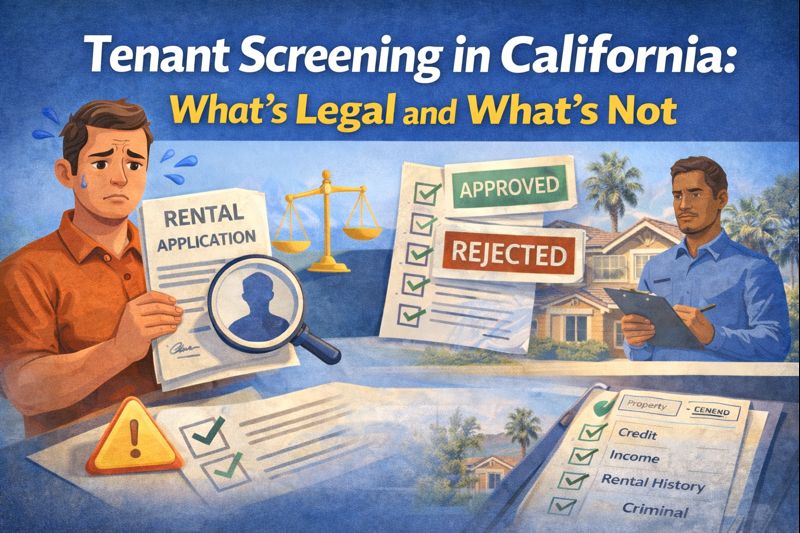
Tenant Screening in California: What’s Legal and What’s Not
Tenant screening is one of the most important—and most misunderstood—parts of owning a rental property in California. For accidental landlords and small mom-and-pop investors, screening often feels like a common-sense process: check credit, verify income, trust your gut, and move on.
Unfortunately, that approach can lead directly to fair housing complaints, legal disputes, and costly mistakes.
In cities like Rancho Cucamonga, Upland, Fontana, and Ontario, California’s tenant-friendly laws leave very little room for error. Understanding what’s legal—and what’s not—is essential if you want to protect your investment and avoid lawsuits.
Why Tenant Screening Is a Legal Minefield in California
California has some of the strictest fair housing and consumer protection laws in the country. These laws aren’t just about discrimination—they also regulate how you screen, what you can consider, and how consistently you apply your standards.
Most screening-related legal issues don’t happen because landlords intend to discriminate. They happen because landlords:
Apply different rules to different applicants
Ask the wrong questions
Reject tenants without proper documentation
Rely on informal judgment instead of written criteria
This is where many accidental landlords get into trouble.
What Is Legal to Consider When Screening Tenants?
California law allows landlords to screen tenants—but only using objective, consistent, and documented criteria.
✔ Credit History (With Limits)
You may legally review a tenant’s credit report, including payment history and outstanding debt. However:
You must apply the same credit standards to all applicants
You cannot selectively overlook credit issues for some but not others
You must comply with credit reporting and disclosure rules
Professional property management companies set clear credit benchmarks and apply them uniformly, reducing the risk of discrimination claims.
✔ Income & Employment Verification
Landlords may verify income and employment to confirm the tenant can afford the rent. Best practices include:
Using a consistent income-to-rent ratio
Accepting legally verifiable income sources
Applying the same standards to every applicant
Problems arise when landlords make exceptions without documentation or apply different standards based on personal impressions.
✔ Rental History
Reviewing past landlord references and eviction history is allowed, provided:
You verify information consistently
You document decisions
You avoid assumptions not supported by facts
✔ Background Checks (With Caution)
Criminal background checks are legal in California, but how you use them matters. Blanket “no criminal history” policies are risky and often unlawful.
Landlords must consider:
The nature of the offense
How long ago it occurred
Whether it’s relevant to tenancy
This is an area where professional property management guidance is especially valuable.
What Is NOT Legal in Tenant Screening?
Many small landlords unintentionally cross legal lines simply by asking the wrong questions or relying on intuition.
❌ Asking About Protected Characteristics
You may not ask about or base decisions on:
Race or ethnicity
Religion
Gender or sexual orientation
Family status (including children)
Disability or medical conditions
National origin or immigration status
Even casual conversation can create legal exposure if it influences a decision.
❌ Inconsistent Screening Standards
One of the fastest ways to trigger a fair housing complaint is inconsistency.
For example:
Approving one tenant with poor credit but denying another
Allowing a co-signer in one case but not another
Ignoring red flags for some applicants
Consistency is not optional—it’s a legal requirement.
❌ Rejecting Tenants Without Proper Process
California law requires transparency. If you deny an applicant based on credit or background information, you must provide proper notices and disclosures.
Failing to do so opens the door to disputes and complaints.
Why Accidental Landlords Are Most at Risk
Accidental landlords—those who never planned to manage rental property long-term—are especially vulnerable. Without formal systems, screening often becomes:
Informal
Emotional
Rushed
Poorly documented
Small mom-and-pop investors face similar risks. When you only manage one or two properties, a single fair housing complaint can feel overwhelming—and expensive.
This is one of the top reasons property owners in Rancho Cucamonga, Upland, Fontana, and Ontario turn to professional property management services.
How Property Management Protects Landlords During Screening
Professional property management companies don’t just find tenants—they protect landlords from legal exposure.
A quality property manager:
Uses written, legally reviewed screening criteria
Applies standards consistently to all applicants
Handles disclosures and documentation correctly
Keeps detailed records to defend decisions if challenged
This creates a clear paper trail that protects the landlord—not just the tenant.
Screening for the Right Tenant, the Right Way
Good tenant screening isn’t about being strict—it’s about being fair, consistent, and compliant.
The goal is to:
Reduce late payments and evictions
Protect the condition of the property
Avoid legal disputes and fair housing claims
Create long-term stability for both landlord and tenant
For small landlords, achieving this alone can be difficult without experience and legal knowledge.
Final Thought
Tenant screening in California is not something to “wing.” The laws are complex, the penalties are real, and good intentions don’t protect you from legal consequences.
If you’re an accidental landlord or small investor managing property in Rancho Cucamonga, Upland, Fontana, or Ontario, understanding what’s legal—and what’s not—is critical. Partnering with a professional property management company often costs far less than the price of one screening mistake.
The right tenant can make owning a rental enjoyable. The wrong screening process can make it a legal nightmare.