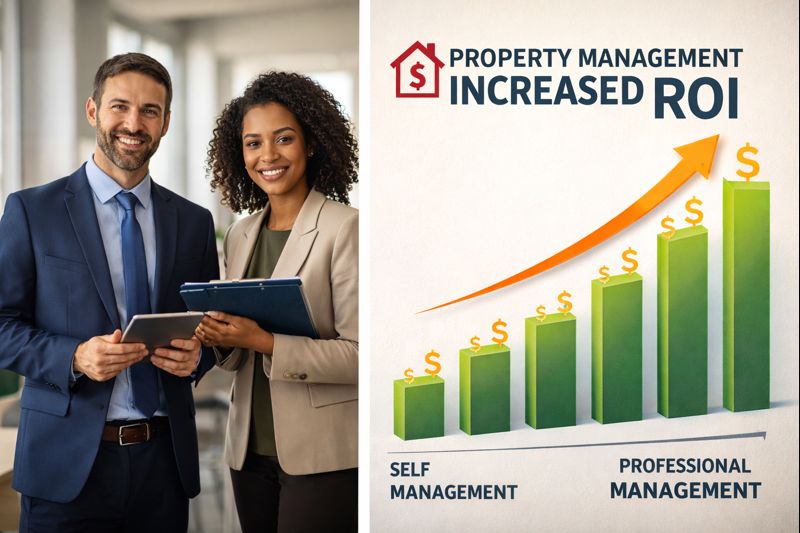
How Professional Property Management Increases ROI
For real estate investors, return on investment (ROI) is the ultimate measure of success. While many landlords focus on purchase price and rent amounts, experienced investors know that ROI is driven just as much by how a property is managed as where it’s located.
Professional property management is often misunderstood as an added expense. In reality, when executed correctly, it is one of the most effective tools for increasing ROI, reducing risk, and stabilizing long-term cash flow. This article breaks down exactly how professional property management improves financial performance—and why many top-performing investors consider it a profit strategy, not a cost.
1. Reduced Vacancy = Higher Annual Returns
Vacancy is one of the fastest ways to destroy ROI. Every day a unit sits empty represents lost income that can never be recovered.
Professional property management increases ROI by:
Pricing rentals accurately based on real-time market data
Launching listings immediately with high-quality photos and descriptions
Responding to inquiries quickly and consistently
Scheduling showings efficiently
Even reducing vacancy by one to two weeks per year can significantly increase annual returns—often more than the total cost of management fees.
Self-managed properties commonly experience longer vacancy due to delayed responses, mispricing, or limited availability for showings.
2. Better Tenant Quality Means Lower Turnover Costs
Tenant turnover is expensive. Lost rent, cleaning, repairs, marketing, and leasing fees all eat into profits.
Professional property managers focus heavily on tenant quality, not just tenant placement.
ROI improves through:
Consistent, legally compliant screening criteria
Income and rental history verification
Reduced late payments and defaults
Longer average tenancy
High-quality tenants stay longer, take better care of the property, and require less intervention—dramatically improving net operating income over time.
3. Strategic Rent Optimization (Not Just Rent Increases)
Raising rent is not the same as optimizing rent. Poorly timed or improperly executed rent increases can lead to vacancy, disputes, or legal issues.
Professional property management increases ROI by:
Monitoring local rent trends and demand
Implementing compliant, well-timed rent increases
Avoiding underpricing that leaves money on the table
Preventing overpricing that causes vacancy
Over several years, small, strategic adjustments compound into significant income gains, while maintaining tenant stability.
4. Lower Maintenance Costs Through Proactive Management
Deferred maintenance is one of the most common ROI killers in rental property ownership.
Professional property managers protect ROI by:
Conducting routine inspections
Addressing small issues before they become major repairs
Using trusted vendors with negotiated pricing
Preventing tenant-caused damage through early intervention
Proactive maintenance costs less than emergency repairs—and it preserves property value, which directly impacts long-term ROI and resale potential.
5. Fewer Legal Mistakes and Costly Disputes
Legal and compliance mistakes can instantly erase years of profit. Security deposit errors, improper notices, or eviction missteps often result in fines, refunds, or lawsuits.
Professional property management increases ROI by:
Ensuring compliance with landlord-tenant laws
Using up-to-date lease documents and disclosures
Properly handling notices, deposits, and documentation
Reducing disputes through consistent enforcement
Avoiding just one legal mistake can save thousands of dollars—making professional management pay for itself many times over.
6. Time Efficiency Creates Opportunity Cost Gains
ROI isn’t just financial—it’s also about time leverage.
Self-managing landlords spend countless hours on:
Tenant communication
Maintenance coordination
Accounting and record-keeping
Emergencies and after-hours issues
Professional property management frees investors to:
Acquire additional properties
Focus on higher-value activities
Scale portfolios without burnout
Maintain passive income streams
When investors can grow without increasing workload, ROI expands far beyond a single property.
7. Improved Financial Visibility and Decision-Making
Professional property management provides detailed financial reporting that helps investors make smarter decisions.
This includes:
Monthly income and expense statements
Year-end summaries
Repair histories and cost tracking
Performance trends over time
Clear data allows investors to identify underperforming assets, optimize expenses, and plan strategically—leading to better portfolio-wide ROI.
8. Stronger Long-Term Asset Appreciation
ROI is not only about cash flow—it’s also about asset preservation and appreciation.
Well-managed properties:
Attract better tenants
Experience less physical wear
Maintain higher market appeal
Command stronger resale values
Professional management protects the physical condition of the asset, ensuring long-term value growth alongside short-term income.
Why Many Investors Misjudge Management Costs
Landlords often focus on the management fee instead of the net financial outcome.
The real comparison isn’t:
“How much does property management cost?”
It’s:
“How much does poor management cost me every year?”
When vacancy loss, turnover, maintenance inefficiency, legal exposure, and time drain are factored in, professional property management often increases net returns, not reduces them.
When Professional Property Management Has the Biggest ROI Impact
Professional management delivers the strongest ROI benefits for investors who:
Own multiple rental properties
Hold long-term investments
Own multifamily or higher-value assets
Live outside the local market
Want scalable, passive income
As portfolios grow, professional management becomes less optional—and more essential.
Final Thoughts: ROI Is About Execution, Not Just Acquisition
Buying the right property is only the first step. How that property is managed determines whether it becomes a high-performing asset or a constant drain.
Professional property management increases ROI by:
Reducing vacancy
Improving tenant quality
Controlling costs
Preventing legal mistakes
Protecting long-term value
For investors focused on sustainable growth, predictable income, and long-term wealth, professional property management isn’t an expense—it’s a return multiplier.