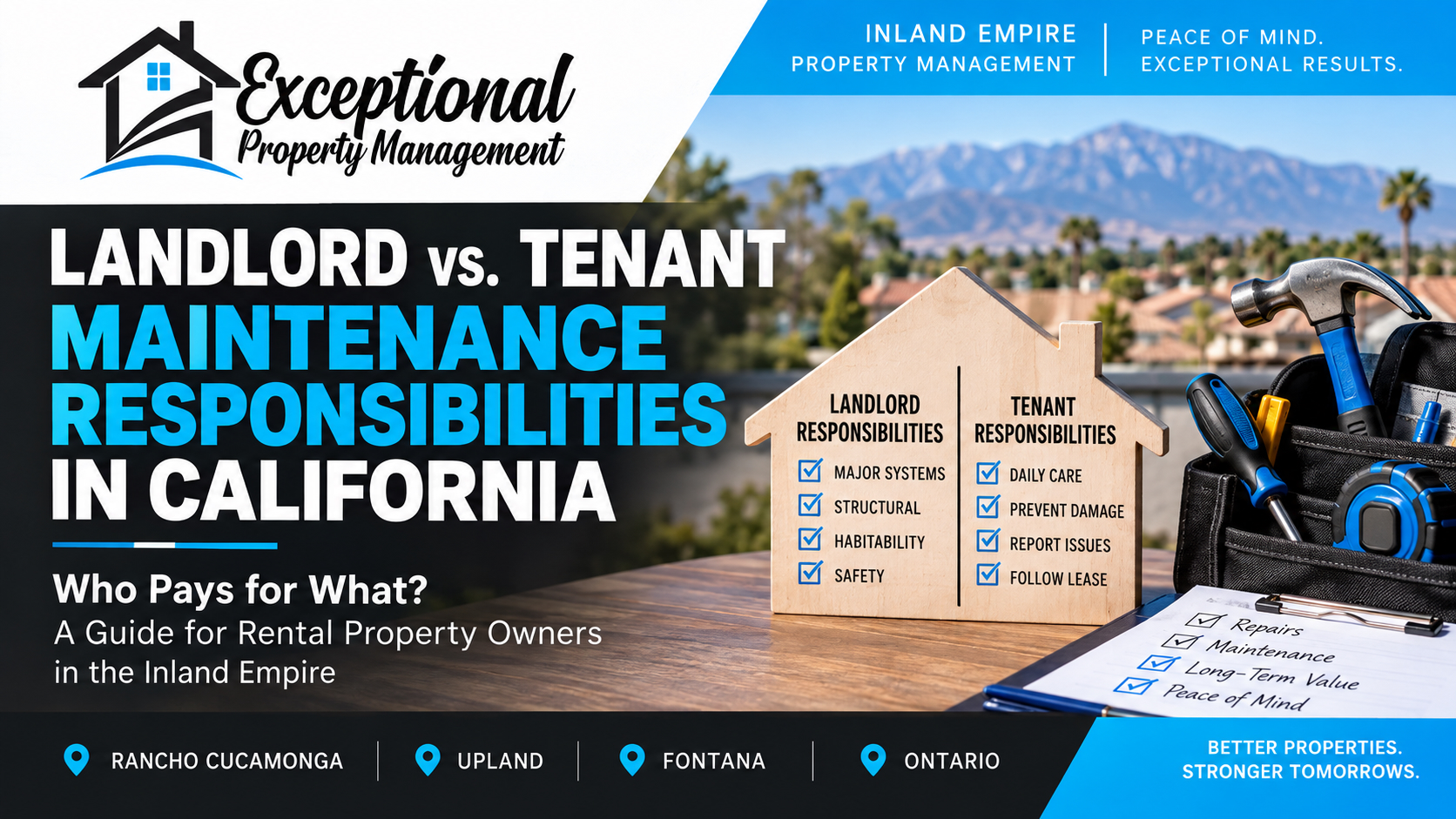
Landlord vs. Tenant Maintenance Responsibilities in California: Who Pays for What?
One of the most common sources of conflict between California landlords and tenants is surprisingly simple: Who is responsible for fixing it?
For accidental landlords and small rental property owners in Rancho Cucamonga, Upland, Fontana, and Ontario, understanding the difference between landlord maintenance responsibilities and tenant responsibilities can help prevent disputes, protect the property, and reduce costly mistakes.
California law places significant responsibility on rental property owners, but that does not mean the landlord is automatically responsible for every repair.
Here is what Inland Empire rental property owners should know.
What Maintenance Is a California Landlord Responsible For?
California landlords generally have a legal obligation to provide and maintain a rental property that meets basic habitability requirements.
Under California Civil Code Sections 1941 and 1941.1, rental housing must meet certain minimum standards. Depending on the circumstances, this can include functioning plumbing, hot and cold water, heating, electrical systems, weather protection, sanitary conditions, and other health and safety requirements.
In practical terms, landlords are generally responsible for repairing or replacing major components of the property when they fail because of age, ordinary use, or normal wear and tear.
Examples may include:
- A water heater that stops working because of age
- An HVAC system that fails through normal operation
- Plumbing leaks that were not caused by the tenant
- Electrical problems within the property
- A roof leak
- A broken garage door caused by mechanical failure
- Appliances supplied by the landlord that fail through normal use, depending on the lease and circumstances
- Structural or safety-related repairs
Ignoring serious habitability issues can create much larger problems than the original repair. California Courts specifically recognizes conditions such as lack of heat, water leaks, broken locks, and lack of hot water as potential habitability issues when they were not caused by the tenant or the tenant’s guests.
What Maintenance Is the Tenant Responsible For?
Tenants also have responsibilities.
A landlord is not necessarily required to pay for damage caused by a tenant, occupant, guest, pet, misuse, negligence, or a violation of the rental agreement.
For example, there is a major difference between a 15-year-old garbage disposal that simply stops working and a disposal damaged because inappropriate items were repeatedly put into it.
Tenant responsibility could potentially include:
- Broken doors or walls caused by the tenant or guests
- Clogged plumbing caused by improper items being flushed or placed down drains
- Damage caused by unauthorized pets
- Broken fixtures resulting from misuse
- Excessive damage beyond normal wear and tear
- Certain yard-care responsibilities specifically assigned under the lease
- Failure to properly use or care for equipment provided with the property
The key is determining why the problem occurred, not simply identifying what broke.
Normal Wear and Tear vs. Tenant Damage
This is where many California landlords get into trouble.
A rental property is going to deteriorate over time. Carpet wears down. Paint fades. Appliances age. Hardware loosens. Flooring gets worn.
Those conditions are different from tenant-caused damage.
California Courts explains that landlords may deduct from a security deposit for repairing damage caused by a tenant or the tenant's guests, but not for normal wear and tear.
That distinction makes documentation extremely important.
Move-in condition reports, photographs, inspection records, maintenance invoices, work orders, and communication with tenants can help establish whether something resulted from ordinary aging or tenant damage.
Can the Lease Make the Tenant Responsible for Maintenance?
A well-written lease can assign certain routine responsibilities to tenants, but landlords should not assume that putting something into a lease eliminates obligations imposed by California law.
This is particularly important with repairs involving health, safety, and habitability.
Instead, rental agreements should clearly establish responsibilities for items such as landscaping, changing HVAC filters, reporting leaks promptly, preventing drain abuse, replacing certain consumable items, and properly maintaining tenant-controlled areas.
The lease should also explain the tenant's obligation to promptly report maintenance problems.
A small leak that costs a few hundred dollars to repair today can become thousands of dollars in water, drywall, flooring, and mold-related damage if it goes unreported.
What Happens When the Tenant Caused the Damage?
When there is evidence that the tenant caused damage beyond normal wear and tear, the owner may have options to hold the tenant financially responsible.
But documentation matters.
Simply telling a tenant, “You broke it, so you owe me $800,” is a poor maintenance-management strategy.
A professional process should document the original maintenance request, property condition, technician's findings, photographs when appropriate, invoices, lease provisions, and communication with the tenant.
At move-out, California's security-deposit rules also restrict what landlords may deduct and impose requirements for accounting for deductions.
Why Maintenance Management Is Harder Than It Looks
For a landlord with one or two properties, maintenance often starts casually.
The tenant sends a text. The landlord calls a handyman. Someone fixes the problem.
That works—until there is a disagreement over responsibility.
Professional property management creates a documented process from the initial maintenance request through completion.
At Exceptional Property Management, we help rental property owners coordinate maintenance, communicate with tenants, work with vendors, document property conditions, conduct inspections, and determine responsibility based on the lease, circumstances, and applicable California requirements.
For accidental landlords and small investors, this can be especially valuable because one incorrectly handled repair can quickly become a tenant dispute, security-deposit disagreement, habitability claim, or expensive property problem.
Property Management in Rancho Cucamonga, Upland, Fontana & Ontario
If you own a rental property in Rancho Cucamonga, Upland, Fontana, or Ontario, you don't have to personally determine who should pay every time something breaks.
Exceptional Property Management provides professional property management services for Inland Empire rental property owners who want to protect their investment without handling every tenant call, repair request, inspection, lease issue, and vendor themselves.
From tenant screening and leasing to rent collection, maintenance coordination, property inspections, lease enforcement, and day-to-day management, our goal is simple: protect your property, reduce your risk, and make rental ownership easier.
If you're an accidental landlord, own a few investment properties, or simply want a more professional system for managing your rental, contact Exceptional Property Management to learn how we can help manage your Inland Empire rental property.