
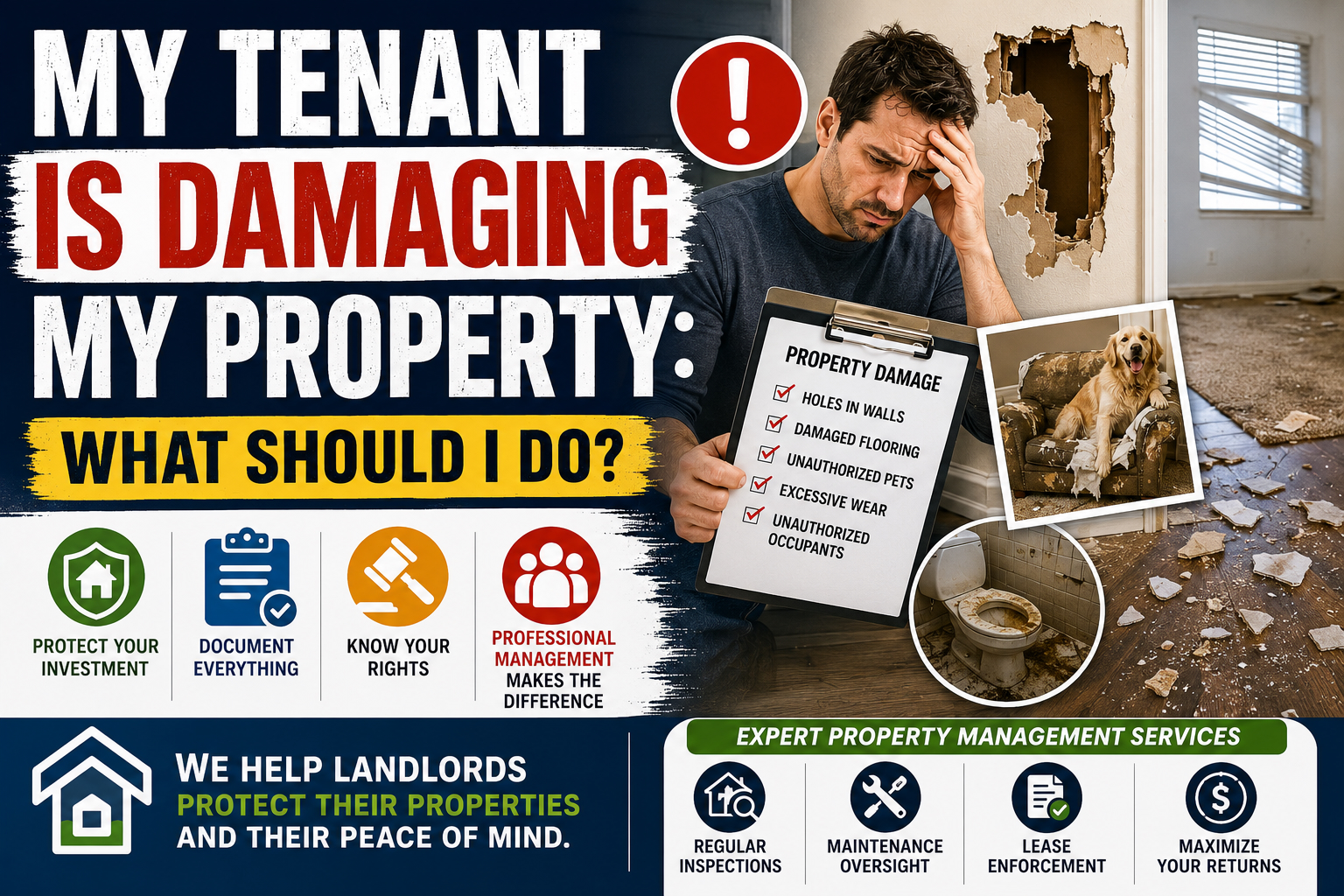
My Tenant Is Damaging My Property: What Should I Do?
One of the most stressful phone calls a landlord can receive is a report that a tenant may be damaging their rental property.
Whether it's unauthorized pets destroying flooring, large holes appearing in walls, neglected landscaping, excessive trash accumulation, or evidence of unauthorized occupants, property damage can quickly turn a profitable rental investment into a costly problem.
For accidental landlords and small mom-and-pop investors in Rancho Cucamonga, Upland, Fontana, and Ontario, knowing how to respond appropriately can make the difference between protecting your investment and facing thousands of dollars in avoidable repairs.
The key is taking action early, documenting everything, and following California landlord-tenant laws properly.
First, Don't Panic
When landlords hear the words "property damage," they often assume the worst.
However, not every report results in catastrophic repairs.
Some situations involve:
- Deferred housekeeping
- Minor lease violations
- Maintenance neglect
- Unauthorized pets
- Unauthorized occupants
- Excessive wear and tear
Others may involve significant damage requiring immediate intervention.
Before making assumptions, gather facts and verify the situation.
Document Everything
Documentation is your most important tool when dealing with tenant-caused property damage.
If damage is discovered during a routine inspection, maintenance visit, or tenant communication, immediately begin creating a record.
Helpful documentation includes:
- Photos
- Videos
- Inspection reports
- Maintenance records
- Written communication
- Vendor evaluations
The more documentation you have, the easier it becomes to address the issue properly and protect yourself if disputes arise later.
Many professional property management companies conduct regular inspections specifically because early documentation often prevents larger problems.
Determine the Severity of the Damage
Not all damage is equal.
A few extra nail holes in a wall are very different from substantial flooring damage caused by unauthorized pets.
Generally, issues fall into three categories:
Minor Damage
Examples include:
- Small wall damage
- Broken blinds
- Missing screens
- Cosmetic issues
Moderate Damage
Examples include:
- Pet damage
- Carpet staining
- Unauthorized alterations
- Neglected landscaping
Major Damage
Examples include:
- Water damage
- Structural damage
- Intentional destruction
- Severe neglect
- Hoarding situations
Understanding the severity helps determine the appropriate response.
Address Problems Early
One of the biggest mistakes landlords make is waiting too long.
Many owners hope the problem will resolve itself.
Unfortunately, property damage rarely improves with time.
A small issue today often becomes a larger and more expensive issue tomorrow.
For example:
- A pet accident can become subfloor damage.
- A plumbing leak can become mold and drywall replacement.
- Excessive clutter can become a health and safety concern.
Early intervention almost always reduces repair costs.
Communicate Professionally
Once damage is confirmed, communicate with the tenant professionally and in writing.
Avoid emotional language or accusations.
Instead:
- Describe the concern.
- Reference the lease provision involved.
- Request corrective action.
- Establish a reasonable timeframe for compliance.
Maintaining professional communication protects your position while often resolving issues without conflict.
Many tenants will correct violations once they understand the concern and expectations.
Understand the Difference Between Damage and Wear and Tear
This distinction is critical.
Normal wear and tear is generally a cost of doing business as a landlord.
Examples may include:
- Faded paint
- Worn carpet from normal use
- Minor scuff marks
- Aging fixtures
Tenant-caused damage generally involves negligence, abuse, misuse, or unauthorized alterations.
Examples include:
- Broken doors
- Pet urine damage
- Large holes in walls
- Missing fixtures
- Burn marks
- Unauthorized remodeling
Understanding the difference helps avoid disputes and ensures deductions are handled properly at move-out.
Regular Inspections Protect Your Investment
One reason many landlords discover major damage too late is because they rarely inspect the property.
Routine property inspections can identify:
- Lease violations
- Unauthorized occupants
- Unauthorized pets
- Maintenance issues
- Property damage
For landlords in Rancho Cucamonga, Upland, Fontana, and Ontario, regular inspections are one of the most effective tools available for protecting rental property assets.
Professional property management companies typically incorporate scheduled inspections into their management process.
Why Accidental Landlords Are Often Vulnerable
Accidental landlords frequently find themselves at greater risk because they entered rental ownership unexpectedly.
Many have:
- Limited landlord experience
- No inspection schedule
- No maintenance tracking system
- Limited understanding of California landlord laws
As a result, problems often go unnoticed until a tenant moves out and repair costs become significant.
This is one reason many accidental landlords eventually seek professional property management assistance.
The Hidden Cost of Property Damage
Many landlords focus only on repair costs.
However, the true financial impact is often much larger.
Property damage can also create:
- Vacancy loss
- Delayed leasing
- Contractor expenses
- Lost rental income
- Increased turnover costs
- Reduced property value
A tenant who causes $3,000 in damage may ultimately cost much more when vacancy and turnover expenses are included.
Preventing damage is almost always less expensive than repairing it.
How Professional Property Management Helps
Professional property management isn't simply about collecting rent.
One of the most valuable services property managers provide is asset protection.
Through regular inspections, maintenance coordination, tenant communication, and lease enforcement, property managers help identify and resolve issues before they become major financial problems.
For landlords searching for property management services in Rancho Cucamonga, Upland, Fontana, and Ontario, proactive property oversight is often one of the biggest benefits of hiring a professional management company.
Protecting Your Rental Property for the Long Term
Rental property is often one of the largest investments a landlord owns.
Whether you inherited a home, converted a former residence into a rental, or intentionally purchased investment property, protecting that asset should be a top priority.
When tenant damage occurs, the most important steps are:
- Stay calm
- Document everything
- Address issues quickly
- Communicate professionally
- Follow California law
- Conduct regular inspections
Most importantly, don't wait for small problems to become large ones.
For many landlords throughout Rancho Cucamonga, Upland, Fontana, and Ontario, professional property management provides the systems, oversight, and experience necessary to protect rental properties while reducing stress and preserving long-term profitability.
When it comes to rental property ownership, protecting the condition of the property is just as important as collecting the rent.