
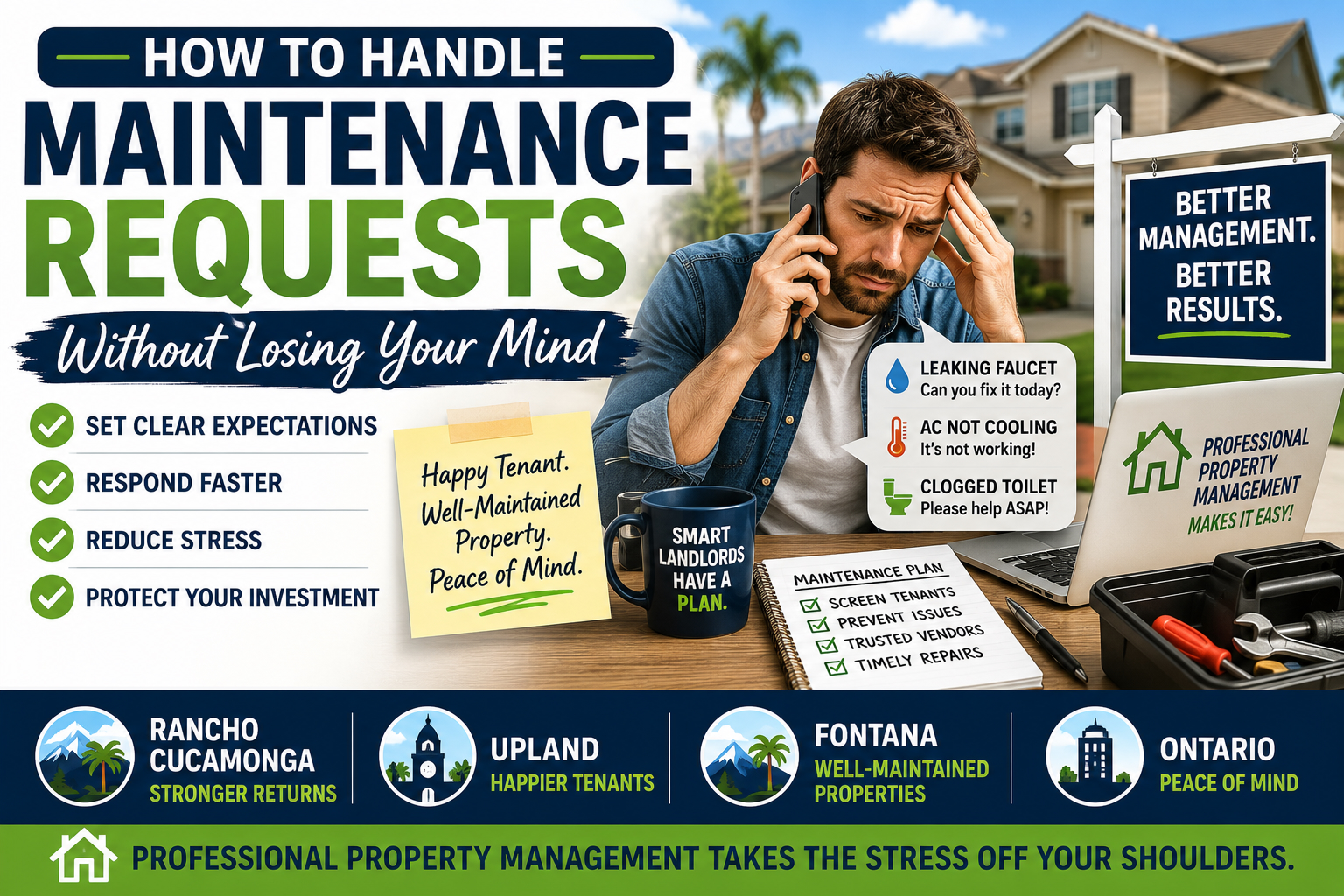
How to Handle Maintenance Requests Without Losing Your Mind
If you're an accidental landlord or small rental property owner, few things can disrupt your day faster than a tenant maintenance request.
You're sitting at work, enjoying dinner with your family, or trying to relax on a weekend when your phone buzzes.
"The water heater isn't working."
"The garbage disposal is jammed."
"The air conditioner stopped cooling."
"The toilet is backing up."
For many landlords in Rancho Cucamonga, Upland, Fontana, and Ontario, maintenance requests are one of the most stressful aspects of owning rental property. In fact, maintenance issues are often the reason many investors eventually seek professional property management services.
The good news is that maintenance doesn't have to control your life. With the right systems, expectations, and processes, you can manage maintenance effectively while protecting your investment and your sanity.
The Problem Isn't Maintenance—It's Chaos
Most landlords don't mind fixing legitimate issues. What they struggle with is the unpredictability.
One week is quiet.
The next week looks something like this:
- Monday: Garbage disposal issue
- Tuesday: Water leak
- Thursday: HVAC service call
- Saturday: Lockout request
- Sunday night: Water heater failure
Without a system in place, maintenance can feel like a second full-time job.
Many accidental landlords find themselves acting as:
- Property manager
- Contractor
- Plumber
- Electrician
- Dispatcher
- Customer service representative
And that's before their actual job starts each morning.
Not Every Maintenance Request Is an Emergency
One of the biggest mistakes landlords make is treating every maintenance request like a five-alarm fire.
The reality is that maintenance requests generally fall into three categories:
Emergency
These situations require immediate attention because they threaten health, safety, or property.
Examples include:
- Active water leaks
- Sewer backups
- No heat during cold weather
- Electrical hazards
- Gas leaks
- Major flooding
Urgent
These issues should be addressed quickly but may not require an immediate after-hours response.
Examples include:
- Water heater failure
- HVAC malfunction
- Appliance breakdowns
Routine
These are normal maintenance items that can be scheduled during regular business hours.
Examples include:
- Dripping faucets
- Minor drywall repairs
- Running toilets
- Loose cabinet hardware
Setting expectations with tenants helps prevent unnecessary panic and reduces late-night phone calls.
Create Clear Reporting Procedures
One reason maintenance becomes overwhelming is because tenants report issues through every communication channel imaginable.
You receive:
- Text messages
- Emails
- Phone calls
- Voicemails
- Social media messages
Sometimes all at once.
Successful landlords establish one method for reporting maintenance requests.
Whether that's an online portal, email system, or dedicated phone line, consistency helps ensure requests are tracked and documented properly.
Professional property management companies typically use maintenance software that records requests, tracks progress, and documents repairs automatically.
Build a Reliable Vendor Network
Nothing increases maintenance stress faster than scrambling to find a plumber at 9:00 PM.
Many landlords wait until there's a problem before searching for help.
That's a mistake.
Every rental property owner should have established relationships with:
- Plumbers
- Electricians
- HVAC technicians
- Handymen
- Roofers
- Appliance repair companies
Having trusted vendors already in place allows you to respond quickly when issues arise.
This is one reason many landlords in Fontana, Rancho Cucamonga, Upland, and Ontario choose professional property management companies. They already have vetted vendor networks ready to respond.
Maintenance Is Cheaper Than Repairs
Many landlords view maintenance as an expense.
Successful investors view maintenance as risk management.
Consider these examples:
Ignoring a $200 plumbing issue could result in thousands of dollars in water damage.
Skipping HVAC service may lead to a costly system replacement.
Neglecting roof maintenance can result in major structural repairs.
Preventative maintenance often costs a fraction of what emergency repairs cost.
The goal is not to eliminate maintenance expenses. The goal is to prevent catastrophic repair bills.
The Hidden Cost of Delayed Maintenance
When landlords delay repairs, the consequences often extend beyond the repair itself.
Delayed maintenance can lead to:
- Tenant dissatisfaction
- Negative reviews
- Lease non-renewals
- Increased vacancy
- Property damage
- Potential legal issues
Good tenants want responsive landlords.
In many cases, addressing maintenance quickly actually helps increase profitability by improving tenant retention.
A tenant who stays for three years is typically far more valuable than one who leaves after a single lease term because maintenance concerns were ignored.
Maintenance Requests Are Actually Valuable Information
This may sound strange, but maintenance requests can actually help protect your investment.
Tenants are often the first people to notice:
- Water leaks
- Roof issues
- Appliance problems
- HVAC concerns
- Plumbing failures
A maintenance request is often an early warning system.
The sooner a problem is identified, the less expensive it usually is to fix.
Many experienced investors encourage tenants to report issues immediately because they understand the long-term value of early detection.
Why Small Investors Burn Out
Many accidental landlords underestimate how much time maintenance coordination requires.
The actual repair may take one hour.
The coordination often takes much longer.
You may spend time:
- Receiving the request
- Contacting vendors
- Scheduling appointments
- Following up with tenants
- Reviewing invoices
- Verifying completion
Multiply that across several properties and maintenance can become a major burden.
This is often the tipping point where landlords begin researching property management services.
How Professional Property Management Simplifies Maintenance
One of the biggest benefits of professional property management is creating systems around maintenance.
Rather than reacting to every issue individually, property managers typically have processes for:
- Request intake
- Emergency triage
- Vendor dispatch
- Repair tracking
- Quality control
- Invoice management
- Owner communication
The result is a more organized and efficient experience for both owners and tenants.
Final Thoughts
If maintenance requests are making you question why you bought a rental property in the first place, you're not alone.
Many accidental landlords and mom-and-pop investors in Rancho Cucamonga, Upland, Fontana, and Ontario find that maintenance coordination becomes one of the most challenging parts of rental ownership.
The key is developing systems, setting expectations, building vendor relationships, and addressing issues proactively.
Remember, maintenance is not the enemy. Unorganized maintenance is.
Whether you manage one rental property or a growing portfolio, having a clear maintenance strategy can help protect your investment, keep tenants happy, reduce vacancy, and allow you to enjoy the benefits of rental property ownership without feeling like you're on call 24 hours a day.