
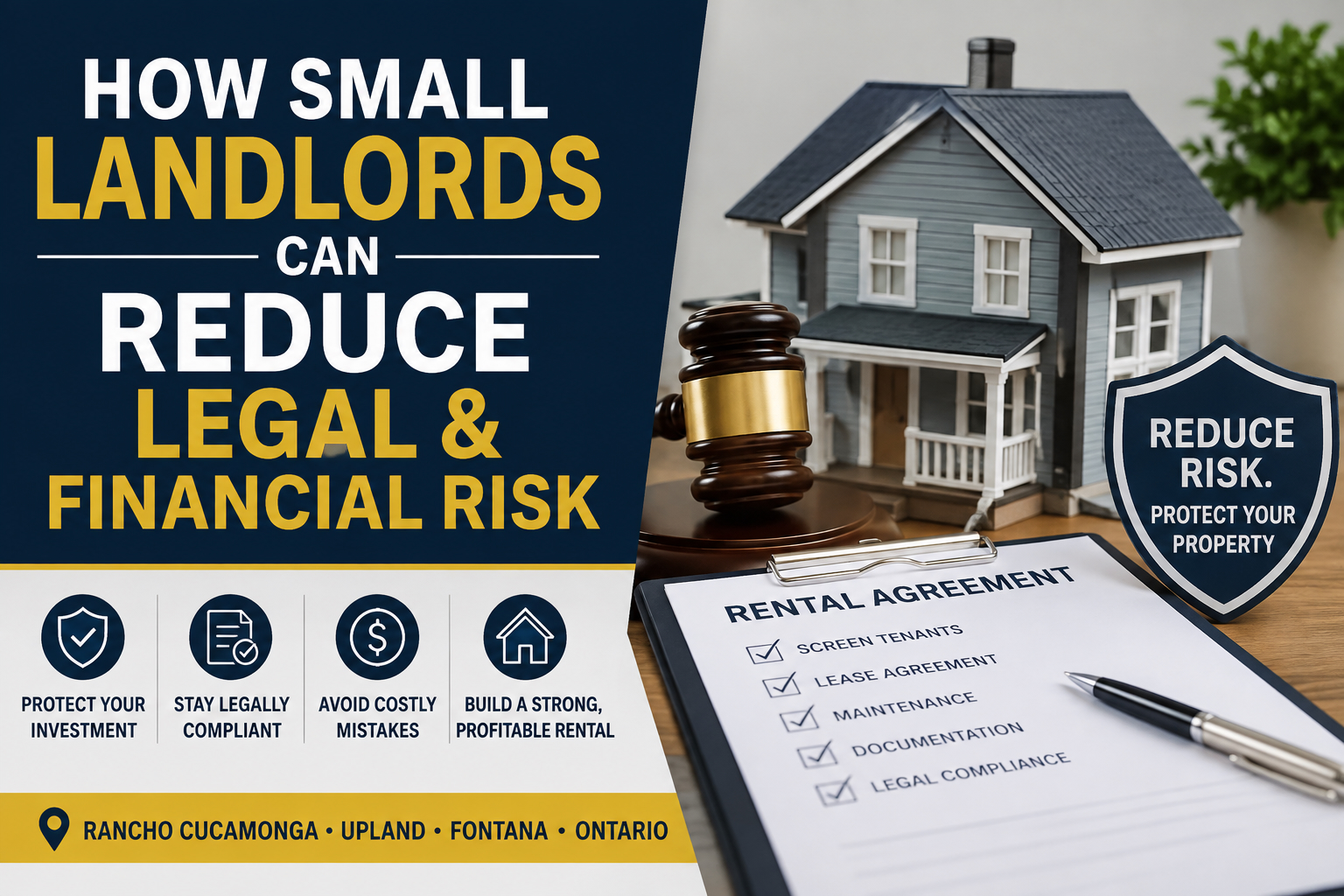
How Small Landlords Can Reduce Legal and Financial Risk
Owning one or two rental properties can be a great way to build long-term wealth, but it also comes with responsibilities that many owners underestimate. This is especially true for accidental landlords—homeowners who never intended to become investors but decided to rent a previous residence rather than sell it.
For small landlords in Rancho Cucamonga, Upland, Fontana, and Ontario, managing a rental property is no longer simply about finding a tenant and collecting rent. California's rental housing laws continue to evolve, and mistakes involving tenant screening, documentation, maintenance, rent increases, notices, or security deposits can expose an owner to significant legal and financial risk.
Here are some practical ways small landlords can better protect themselves and their investment.
1. Use Consistent, Documented Tenant Screening Standards
One of the first areas of potential liability occurs before a tenant ever moves into the property.
Landlords should establish objective rental criteria and apply those standards consistently to every applicant. Criteria may include income requirements, rental history, credit standards, occupancy limits, and other legally permissible factors.
The key is consistency.
Making decisions based on subjective impressions or changing qualification requirements from one applicant to another can create unnecessary fair housing exposure. California also has specific protections involving applicants who receive government rental assistance, making it especially important that screening policies comply with current law.
A professional property management company in Rancho Cucamonga, Upland, Fontana, or Ontario should have established screening procedures designed to create a consistent and well-documented application process.
2. Make Sure Your Lease Is Current
A lease downloaded from the internet several years ago may not adequately protect you today.
California landlord-tenant laws change frequently. The California Department of Real Estate publishes updated landlord-tenant guidance annually, including a 2026 edition reflecting recent legislative and legal changes.
Your rental agreement should clearly address issues such as rent payments, maintenance responsibilities, utilities, pets, alterations, landscaping, entry procedures, insurance requirements, and other property-specific obligations.
Good documentation doesn't eliminate disputes, but it can dramatically improve your position when one occurs.
3. Take Maintenance Requests Seriously
Deferred maintenance isn't just a financial problem—it can become a legal one.
California landlords have a legal responsibility to maintain rental properties in habitable condition. This includes requirements involving plumbing, hot and cold water, heating, electrical systems, weather protection, locks, and freedom from certain pest conditions.
For a small landlord, the challenge is determining which requests require immediate attention, which are routine maintenance, and which may actually be the tenant's responsibility.
Create a system where maintenance requests are submitted in writing, documented, assigned to qualified vendors, and tracked through completion. Keeping records of invoices, photographs, communications, and completed repairs can be extremely valuable if a disagreement occurs later.
4. Document the Property's Condition
Photos may be some of the most valuable documentation a landlord possesses.
California's security-deposit rules now include specific photographic requirements. For tenancies beginning on or after July 1, 2025, landlords must take photographs immediately before or at the beginning of the tenancy. California law also requires photographs following move-out when deductions for cleaning or repairs are involved, including documentation before and after applicable work.
A thorough move-in condition report combined with detailed photographs helps establish what the property looked like before the tenant took possession.
That documentation can make a major difference when determining whether something is tenant-caused damage or ordinary wear and tear.
5. Handle Security Deposits Carefully
Security deposits are another major source of landlord-tenant disputes.
California generally limits residential security deposits to one month's rent, although certain statutory exceptions may apply. Landlords must also follow strict requirements regarding permissible deductions, documentation, and returning the remaining deposit.
Generally, landlords have 21 calendar days after the tenant vacates to provide the required accounting and return the remaining deposit.
Improperly withholding a security deposit can become expensive. California courts note that a tenant may seek the amount wrongfully withheld and potentially additional damages of up to twice the security deposit when a court determines the landlord retained it in bad faith.
6. Don't Treat Notices and Evictions as DIY Paperwork
Notices involving unpaid rent, lease violations, termination of tenancy, rent increases, or eviction should be handled carefully.
A seemingly minor mistake involving the wording, timing, service, or legal basis of a notice can delay the process or potentially create additional liability.
This is an area where saving a few dollars by doing everything yourself can become extremely expensive.
7. Treat Your Rental Like a Business
Perhaps the biggest mistake accidental landlords make is managing the property informally.
Keep rental income and expenses properly documented. Maintain records of tenant communications. Conduct appropriate property inspections. Track lease expiration dates. Maintain adequate landlord insurance and discuss appropriate liability coverage with your insurance professional.
Most importantly, don't wait until there is a problem to develop your management procedures.
Professional Property Management Can Reduce the Burden
Owning a rental property should be an investment—not a second full-time job.
For accidental landlords and small investors, professional property management can provide systems for tenant screening, lease preparation, rent collection, inspections, maintenance coordination, documentation, legal compliance, and tenant communication.
If you own a rental property and are considering property management in Rancho Cucamonga, property management in Upland, property management in Fontana, or property management in Ontario, working with an experienced local property management company can help protect both your property and your investment.
The goal isn't simply to collect rent. It's to operate the rental professionally, reduce unnecessary risk, preserve the property's value, and make owning real estate as predictable and profitable as possible.
This article is for general informational purposes and is not intended as legal advice. California rental laws can change, and property owners should consult qualified legal counsel regarding specific situations.